- Lunch With Norm
- Posts
- [LWN] 😱 The Day My Card Declined...
[LWN] 😱 The Day My Card Declined...
Lunch With Norm's Weekly Newsletter - Amazon News & Updates
😱 The Day My Card Declined…

What you’ll find in this week’s newsletter:
💳 The Day My Card Declined… [True Story]
🤝 TikTok Signs Deal to Transfer U.S. Operations
🤖 Can Walmart’s AI Close the Gap?
✅ Building a Lean “Starter Stack” as a Solo Founder
🔥 She Lost Everything... Then Built a Fitness Empire
💳 The Day My Card Declined… [TRUE STORY]
Back in the ’90s in Toronto, I was hustling to land a massive contract with a Fortune 500 company.
After a year of relentless bidding and going above and beyond with our service, I grew close with their VP of global sales, Samir, he was a gentleman and a half.
One evening, I invited Samir and his wife out for dim sum.
When the check came, I snatched it, ready to impress.
But my credit card?
Declined.

I was mortified.
Samir laughed, paid, and reminded me not to sweat it.
A month later, we secured the deal.
I confessed I’d worried that night might blow it.
He smiled again and said, “We chose you because you always overdeliver, not because of one dinner.”
The lesson?
Trust and consistency outweigh perfection.
Amazon sellers, remember: one hiccup won’t break you, consistently showing up and delivering will
— Norm

👇AMAZON NEWS AND UPDATES👇
🤝 Temu partners with Shopify to launch app for sellers -
📺 Instagram for TV launching first on Fire TV devices
💊 Amazon expands TIC cGMP requirement to all supplement products, plus fast-track option
🚀 Brand Store quality rating now reflect sales performance
🛑 Why retail leaders are cracking down on constant order changes
🔥Amazon plans new one-hour pickup service in stores, Business Insider reports
😱 Amazon Confirms 5-Year-Long Russian Cyberattack
🤝 TikTok Signs Deal to Transfer U.S. Operations to American‑Led Joint Venture
TikTok has signed a definitive agreement to place its U.S. operations into a new joint venture majority controlled by American investors, potentially resolving years of regulatory uncertainty around a U.S. ban.

According to internal memos obtained by Axios and CNBC, the new entity will be called TikTok USDS Joint Venture LLC and is expected to close on January 22.
CEO Shou Zi Chew told employees the deal is designed to address U.S. national security concerns tied to TikTok’s Chinese parent company, ByteDance.
Ownership and Control Structure
The joint venture will be majority owned by American investors and governed by a seven‑member board with a U.S. majority.
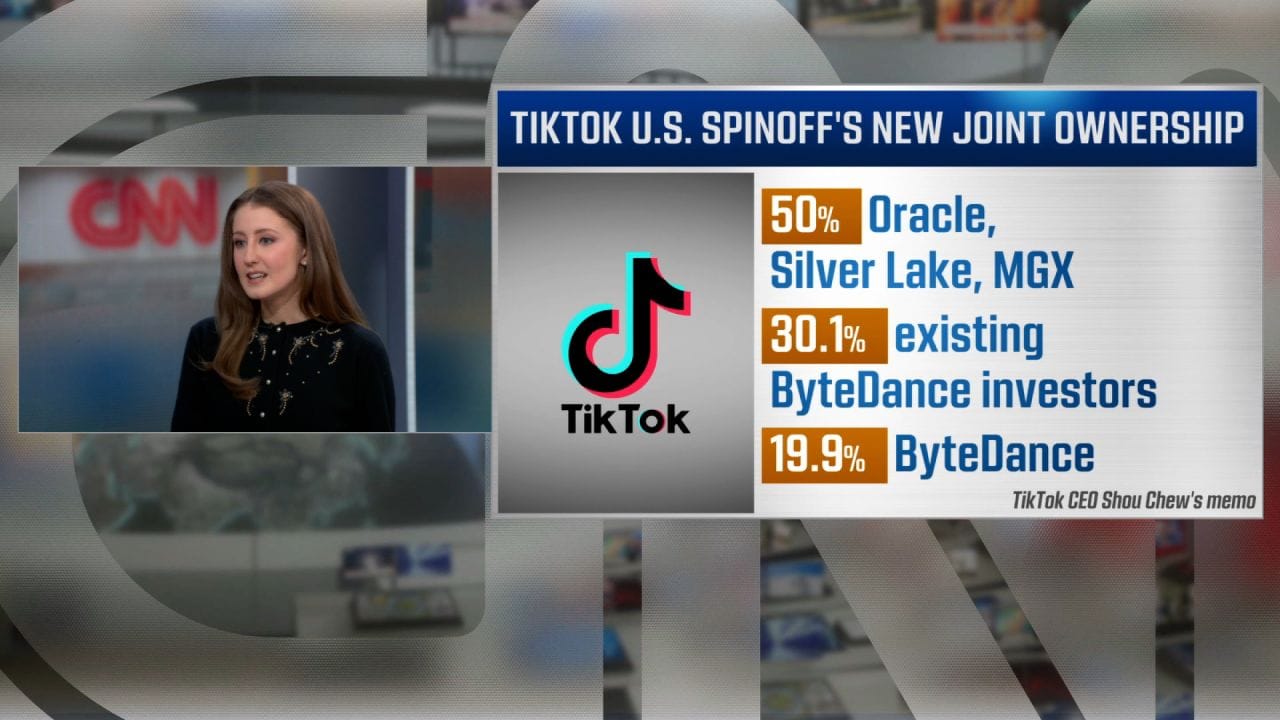
Oracle, Silver Lake, and Abu Dhabi‑based MGX will each hold a 15% stake, totaling 45% combined ownership.
Affiliates of existing ByteDance investors will hold roughly one‑third of the company, while ByteDance itself will retain just under 20%.
The structure is intended to meet U.S. legal requirements while allowing TikTok to continue operating without interruption.
The deal values TikTok’s U.S. business at approximately $14 billion.
Data, Algorithms, and Oversight
Under the agreement, the U.S. joint venture will take responsibility for data protection, algorithm security, content moderation, and software assurance.
Oracle will serve as the trusted security partner, overseeing compliance with national security terms and hosting U.S. user data in its U.S.-based cloud infrastructure.
Notably, the venture will retrain TikTok’s recommendation algorithm using U.S. user data, with the stated goal of ensuring the feed is free from outside influence.
This addresses one of the core concerns raised by U.S. lawmakers: control over TikTok’s algorithm.
TikTok’s existing global teams will continue managing certain international functions, including e‑commerce, advertising, and marketing, to maintain product interoperability across markets.
Regulatory Context
The deal follows a Supreme Court‑upheld national security law requiring ByteDance to divest TikTok’s U.S. operations or face a ban.
President Trump issued a temporary delay on enforcement earlier this year, setting a January 23, 2026 deadline.
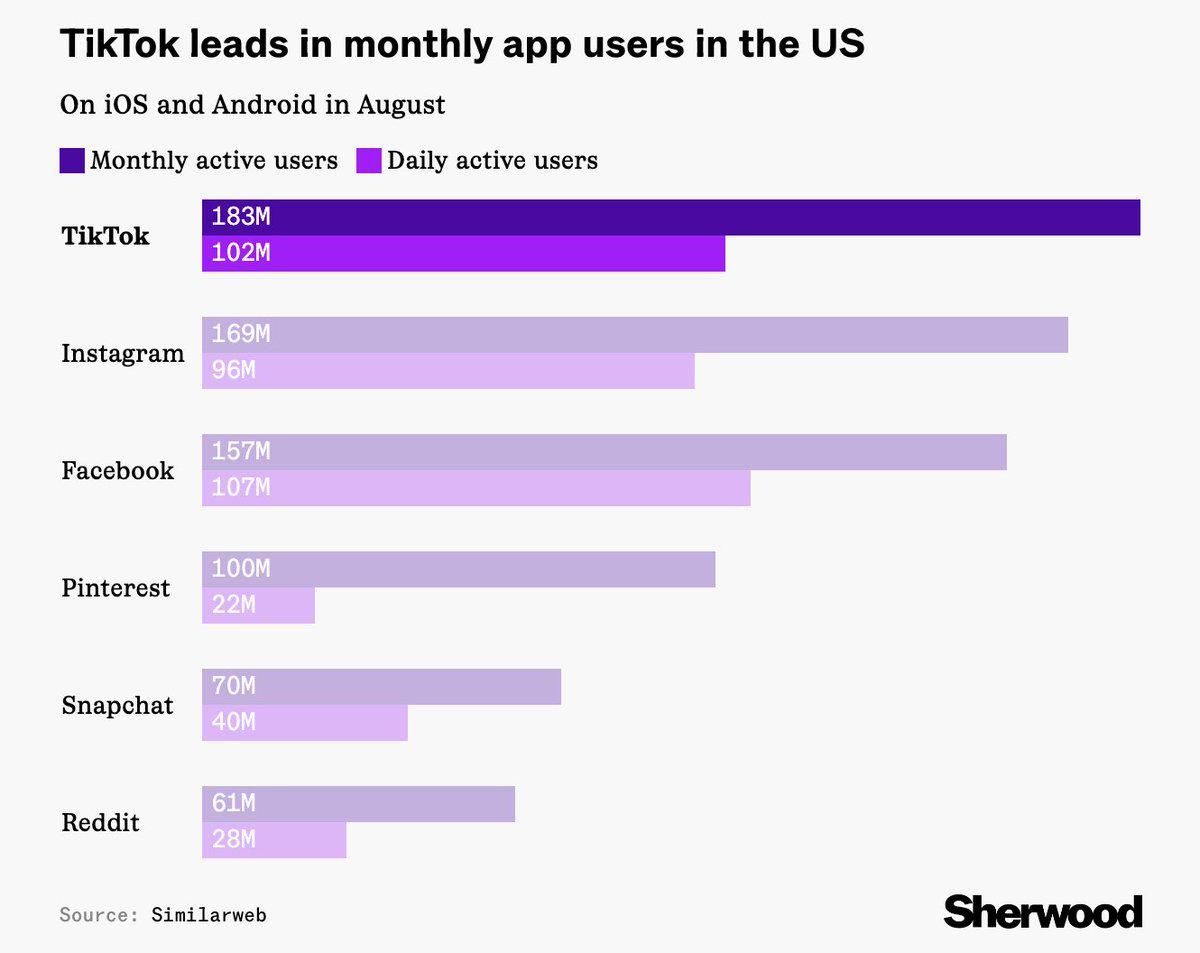
This agreement appears designed to satisfy that requirement without triggering a shutdown for TikTok’s roughly 170 million U.S. users.
What This Means for Users and Brands
If approved and finalized as planned, TikTok users should see little to no immediate change in the app experience.
For advertisers, creators, and ecommerce brands, the deal removes a major overhang that has complicated long‑term planning on the platform.
The remaining open question is execution.
Regulators will closely scrutinize how algorithm retraining, data controls, and governance work in practice. But for now, TikTok has taken its strongest step yet toward securing its future in the U.S.
🔥 Read more here
🤖 Walmart’s AI Offensive: Can It Close the Gap With Amazon?
Walmart is moving fast to transform its identity from a big-box titan into a tech-first retail player and AI is at the center of that shift.
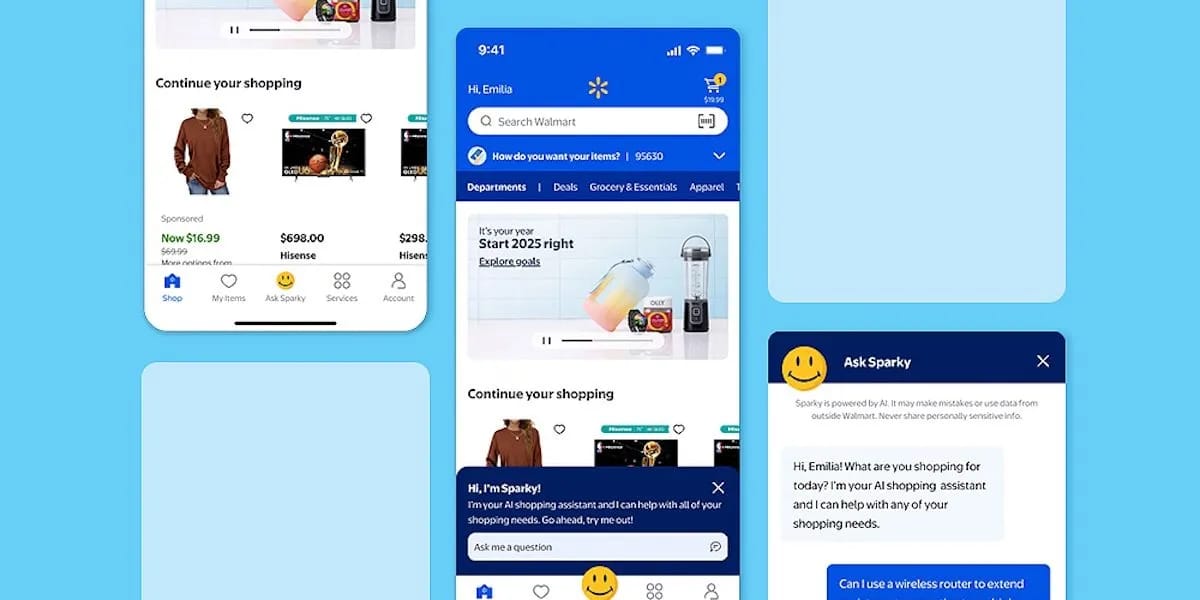
While Amazon had the early lead with its Rufus assistant and AI infrastructure, Walmart is catching up quickly with Sparky and a suite of internal “super agents” aimed at personalization, operations, and developer productivity.
From Retailer to AI Platform
Incoming CEO John Furner is steering the next phase—AI-driven transformation.
Walmart’s generative assistant, Sparky, recommends products, summarizes reviews, and handles queries across shopping touchpoints.
But the company didn’t stop there. It rolled out three internal agentic AI tools for staff, suppliers, and developers, signaling a deep commitment to operational AI, not just customer-facing fluff.
Openness vs. Isolation
Walmart is playing aggressively with outside platforms, integrating ChatGPT for instant checkout and embracing third-party AI ecosystems.
Amazon, on the other hand, is keeping its walls up. It’s blocking ChatGPT and others from interacting with its marketplace and focusing on homegrown tools.
That protective stance might preserve control but risks falling behind in pace and experimentation.
AI as Product Discovery Power
The heart of this battle is recommendation quality.
Whoever builds the smartest, most personalized product discovery engine wins.
Walmart and Amazon are racing to map customer context, demographics, history, preferences, to sprawling databases of products.
Amazon’s Rufus drives conversions with a claimed $10B in incremental revenue.
But experts say Walmart’s moves are faster, bolder, and more collaborative.
Amazon’s Next Moves?
Amazon launched an agentic AI division and “Buy For Me” shopping tools in early 2025, but has shown signs of slowing.
CEO Andy Jassy recently hinted at loosening the company's walled-garden AI stance but insiders see that as a reactive move to Walmart’s acceleration.
With agentic systems, third-party integrations, and AI embedded at every layer, it’s forcing Amazon to play defense.
The AI shopping wars will be won not just by who has the best tech but by who personalizes better, faster, and more openly.
🔥 Read more here
🚀 Amazon Sellers Are Rewriting Listings for AI Search
Amazon sellers are adjusting how they write product listings to perform better in AI‑driven search, especially for Amazon’s AI assistant Rufus, even though Amazon hasn’t issued clear optimization guidelines.

AI Changes the Rules of Discovery
Traditionally, Amazon SEO relied on “keyword stuffing” to get products in front of shoppers.
Rufus, however, uses context and intent. It looks at conversational language to match queries like “best candy for Valentine’s Day” with relevant products, even if exact keywords aren’t in the title.
Titles are being rewritten in more natural language, and descriptions now include phrases and questions actual customers might ask.
One example contrasted a keyword‑crammed title with a cleaner phrase like “Valentine’s Day milk & dark chocolate, 12‑piece heart box,” and supplemental content that reflects real search queries.
More Context = Better AI Results
Because Rufus weighs broader context, sellers are expanding listings with richer detail, product dimensions, compatibility, use cases, FAQs, and even brand story elements. More completeness helps AI understand how and when to recommend a product.
Some brands are updating packaging too.
For example, a nutrition brand is adding “fiber” prominently to package imagery and listing text because Rufus uses image reading as part of discovery.
Real Results Reported
Sellers applying these AI‑friendly listing strategies are seeing measurable lifts:
Optimized products in one test group saw 58% year‑over‑year sales growth compared with a control group.
Another agency reported traffic increases up to 35% after updating listings.
Larger brands reported visibility lifts as well.
Amazon’s Official Stance
Amazon hasn’t changed its public guidance, and spokespeople say there’s no new, specific direction for AI optimization.
That said, Amazon does offer internal generative AI tools that help sellers improve listing titles, descriptions, and bullets which have been associated with higher listing quality.
Why This Matters
Rufus now drives significant traffic and sales: 250 million users have engaged with it in 2025, and users interacting with the assistant are more likely to convert, showing that AI search behavior isn’t niche anymore.
As Amazon shifts toward AI‑led discovery, the fastest adopters of AI‑friendly listing strategies appear to be gaining visibility and sales.
🌎 Where in the World is The Beard Guy?

Can you find Norm in the picture below? Scroll to the bottom of this newsletter to see the answer!
⚒️ Building a Lean “Starter Stack” as a Solo Founder Launching an Offer
Level: Easy
Here’s the exact path we used to build a low-cost setup you can copy in under 30 minutes, then reuse every week. Each step maps to a real business outcome, not “cool features.”
1. Pick one LLM & make it your home base
Start with ChatGPT or Google Gemini on the free plan. Use it for weekly planning, offer brainstorming, competitor notes, and quick drafts.
If you’re doing heavy work daily, a paid plan can be worth it because it gives you more consistency for longer sessions.

2. Create a simple “launch brief” in one doc
Ask your LLM to produce a one-page brief that includes your offer, target customer, three differentiators, and a short FAQ. Keep it tight so you can reuse it everywhere, email, landing page copy, ad angles, and sales call talking points.
‘Create a one page business brief that clearly explains my offer, ideal customer, three key differentiators, and a short FAQ. Keep it concise and written so it can be reused for emails, landing pages, ads, and sales calls. Ask me follow up questions.’
This alone can save you 60 to 90 minutes of rewriting later.

3. Turn that brief into brand-ready assets in Canva
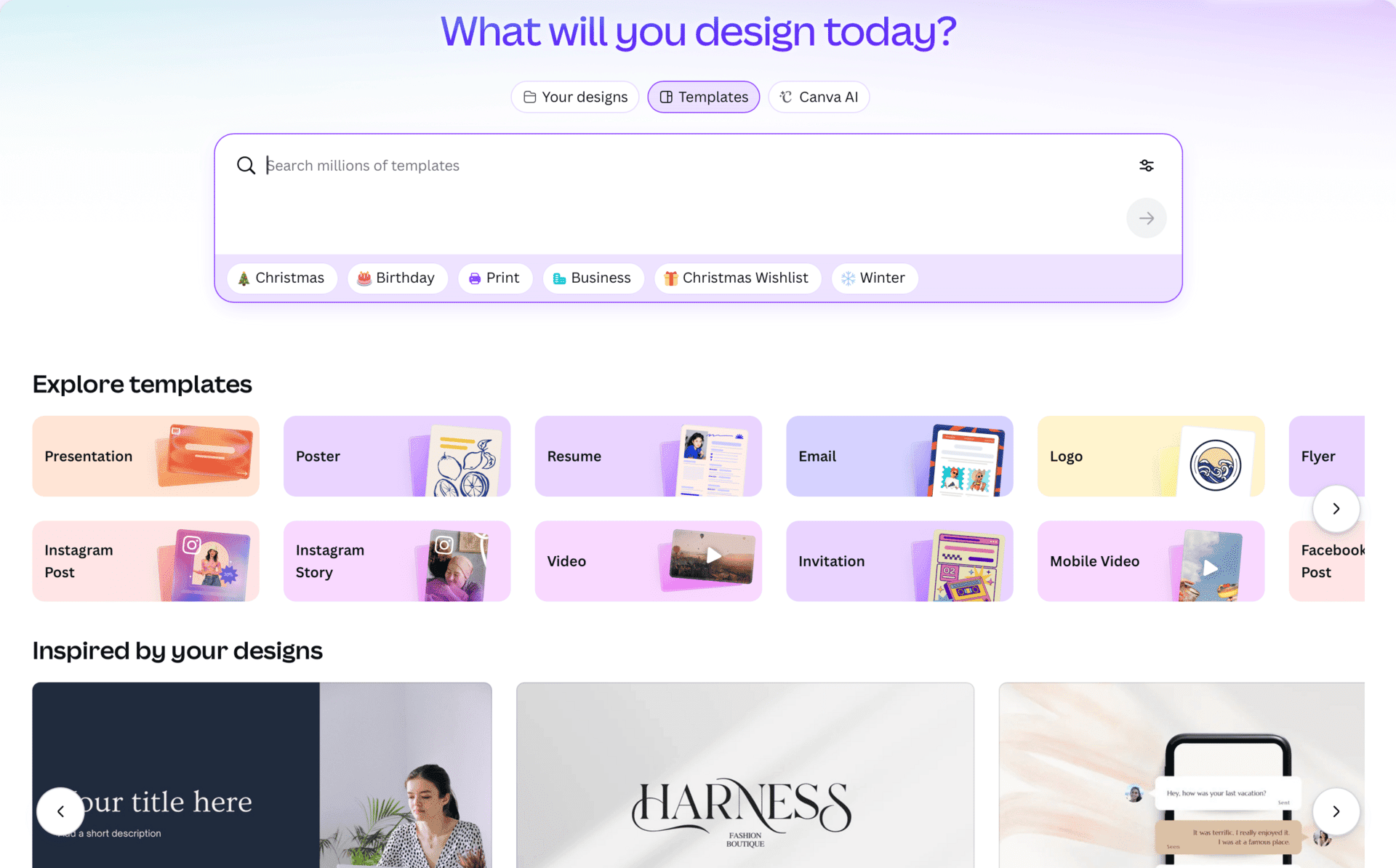
Use Canva’s free plan to assemble your basics: a square post template, a story template, a simple one-page flyer, and a clean header image for your landing page. If you use Magic Studio features often, the paid plan can be a smart upgrade, but you can get far with templates plus your LLM-generated copy.
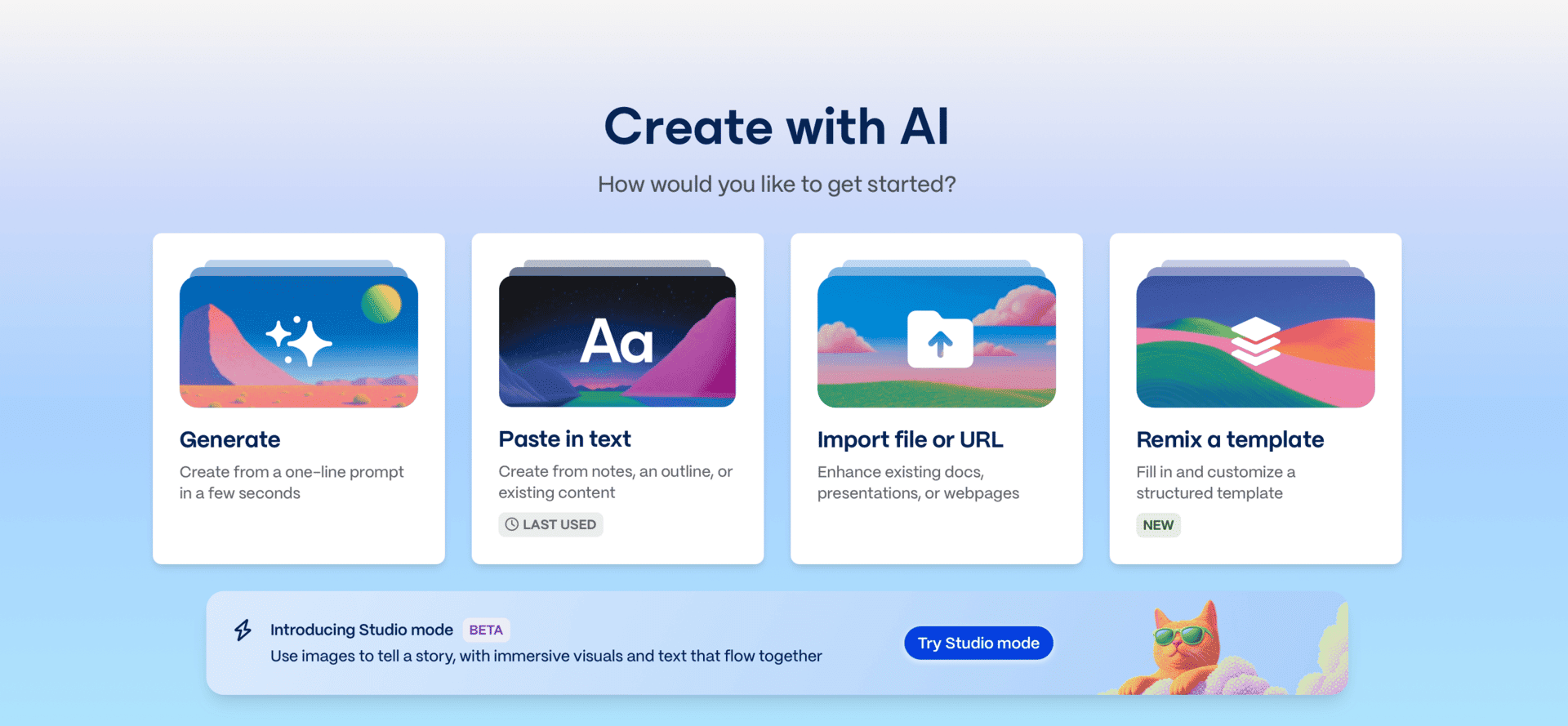
4. Generate a pitch deck in Gamma, then refine with prompts
Paste the launch brief into Gamma and prompt it to create a short deck (6 to 8 slides) with a clear flow: problem, solution, proof, offer, next steps. Then use Gamma Agent style edits like “shorten slide 3” or “make the tone more direct.” You’re aiming for speed here, not perfection.
5. Record one walkthrough & edit it like a document
Record a quick screen walkthrough of your offer or onboarding process. Then bring it into Descript and edit by deleting words in the transcript. Use filler-word removal sparingly so you still sound human. If you’re making content weekly, Descript’s paid features can save real time, but even the free plan covers the core workflow.

6. Capture meetings, save decisions, then add light automation later
If you run client calls or internal check-ins, let Otter take notes and summaries so you don’t spend your evening rewriting action items.
Store final decisions in Notion as your “company brain” (even if your company is just you).
When you’re ready for automation, Zapier or Make can route form responses, draft replies, and update docs, but treat this as a later layer once the basics feel stable.
If you would like to learn more about AI check out FUTUREPEDIA

🔥 She Lost Everything... Then Built a Fitness Empire
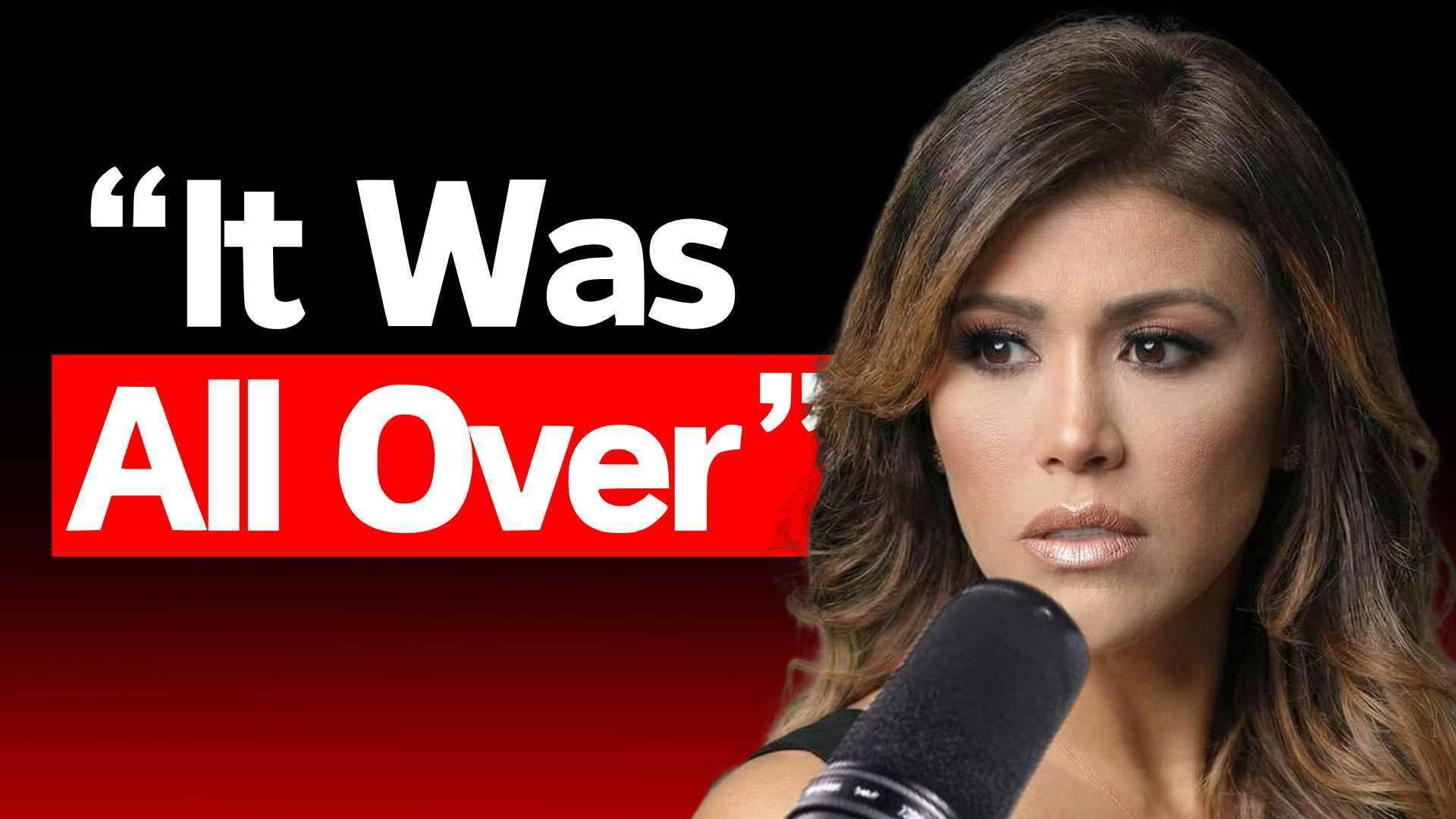
Here are my favorite tips from this episode!
1. Paid ads should amplify proven demand, not discover it
Meta is no longer forgiving with cold creative. CPMs punish weak engagement instantly. Organic content already contains market validation. People stopped scrolling, watched, commented, or shared. That means the message, hook, and framing already resonate.
Use organic content as your pre-ad testing layer. Anything that doesn’t perform organically is a liability in paid. Ads should scale certainty, not gamble on creativity.
2. Live video is being used as “trust-heavy” ad inventory
Live videos feel unscripted and authentic, but they’re being strategically structured for conversion, then repurposed as ads. Viewers lower their guard. Live video bypasses ad blindness because it doesn’t feel like an ad, yet contains selling moments embedded naturally.
Lives are not for discovery alone. They are long-form persuasion assets that can be clipped, hooked, and run as ads with much higher trust than polished creatives.
3. Ads are built as systems, not creatives
One core message gets split into multiple hooks, openings, and angles. Meta selects winners dynamically. Creative fatigue happens at the hook level, not the offer level. By modularizing hooks, sellers extend creative lifespan without rebuilding campaigns.
Stop thinking “make an ad.”
Think “build a creative engine.” One idea should spawn 10–20 entry points.
4. Interest-based distribution replaced follower-based reach
Platforms distribute content based on predicted interest, not who follows you.
Algorithms are optimized for retention, not loyalty. They show content to whoever is most likely to engage, regardless of relationship.
Your existing audience may no longer match your current offer. Sellers must optimize for interest alignment, not audience size.
Broad viral hooks attract wide audiences with low buying intent. Virality optimizes for entertainment, not urgency. Buyers act when a message speaks directly to a specific pain they recognize immediately.
Chasing virality without intent alignment inflates metrics while starving revenue. High-intent content converts even at low reach.
6. Avatar clarity is the primary growth constraint
Most accounts speak to “everyone,” so no one feels spoken to. When content names specific pains precisely, people self-select instantly. Engagement quality improves, not just volume.
If your avatar isn’t painfully clear, ads won’t scale and content won’t convert. Precision beats creativity every time.
7. Revenue comes from raving buyers, not casual fans
Sellers don’t need millions of followers. They need a small group with unresolved problems and purchasing power. Buyers with urgency will spend repeatedly, refer others, and tolerate imperfect execution.
Optimize your business for repeat buyers, not audience growth. Ads should target pain depth, not mass appeal.
8. Content advantage now comes from replication speed
Viral formats, hooks, and scripts are already visible. Winning creators replicate them rapidly instead of inventing new ones. Algorithms reward proven engagement patterns. Originality is risky; adaptation is efficient.
Your competitive edge is execution velocity, not creativity. Study what’s working daily and deploy faster than competitors.
9. Copywriters outperform community managers in growth
Engagement is driven by hooks, framing, and language, not posting frequency or replies alone. Platforms reward watch time and interaction triggered by messaging, not moderation.
If forced to choose, invest in research and copy before community management. Growth starts with words, not workflows.
10. Platform obedience beats platform resistance
Each platform shifts incentives constantly. Sellers who resist lose reach. Algorithms promote content that aligns with current format priorities.
Don’t fight the platform. If it pushes video, do video. If it pushes carousels, do carousels. Strategy adapts to distribution, not the other way around.
🔥 Watch the full episode here
Find this episode of Marketing Misfits on YouTube and anywhere you listen to podcasts
🌎 MARK DOWN THESE EVENTS! 🌎
Feb 10-12 - Dubai - Free
Feb 23-26 - Palm Springs - $499.50
Mar 9-11 - Las Vegas - $895 (For Non Members)
April 21 - 23 - Fort Lauderdale - $799
Mar 10-12 - Las Vegas - Starting at $99
→ FULL CALENDAR ←
And that’s it, Beardos.
See you next Monday!
- Norm

Interested in sponsoring the Lunch With Norm Newsletter? Reply back to this email for more details.
Reply