- Lunch With Norm
- Posts
- [LWN] 🦅 The Moat That Saved a Life...
[LWN] 🦅 The Moat That Saved a Life...
Lunch With Norm's Weekly Newsletter - Amazon News & Updates
🦅 The Moat That Saved a Life…

What you’ll find in this week’s newsletter:
🦅 The Moat That Saved a Life… [True Story]
🔥 Gemini 3: the NEW Leader of AI?
🚀 Conversion Path Reporting is Now Out
⚒️ Build a Business Name & Logo In Seconds [AI Quick Guide]
😱 There’s Now Over 100,000 Million-Dollar Sellers!
🦅 The Moat That Saved a Life… [TRUE STORY]
Yesterday was one of those crisp weekends just before winter fully settles in here in Canada.
I was out on the balcony, cigar in hand, heater on, just soaking in the last bits of comfortable outdoor smoking weather.
My wife’s there, My dog’s lounging on his mat, and everything's peaceful.
Then out of nowhere and WHOOSH!
Two shapes zip right past us.
Turns out it’s a peregrine falcon on the hunt, inches from catching its prey before that little bird darts into a cedar tree.

Fun fact: the peregrine falcon is also the fastest animal on the planet
And what saves the day?
A vine, almost like a natural moat, wrapped around that cedar tree that gave the little guy a second chance at life.
The smaller bird managed to wriggle its way into the vines, just far enough to be out of reach.
The falcon tried it’s hardest to get through the vines but got tired and decided to move on.
This reminded me of selling online.
Just like that bird, you never know when something unexpected is going to come at you.
I often speak about this with Amazon sellers.
You need to build your moat.
How are YOU going to be differentiate yourself from your competitors?
How are YOU going to protect your business?
If you’ve got that extra layer of protection, your own “moat,” so to speak, then you’re a lot more likely to come out unscathed.
Sometimes that moat is a backup plan, sometimes it’s just a bit of extra foresight.
Either way, it’s the little things you put in place that can save you when life swoops in.
— Norm

👇AMAZON NEWS AND UPDATES👇
📈 The numbers are in for the retail return landscape will look like for the holidays
⚠️ Amazon, Walmart, and Target make holiday return policy changes
🤖 Amazon’s AI-powered ad updates level the playing field for SMBs
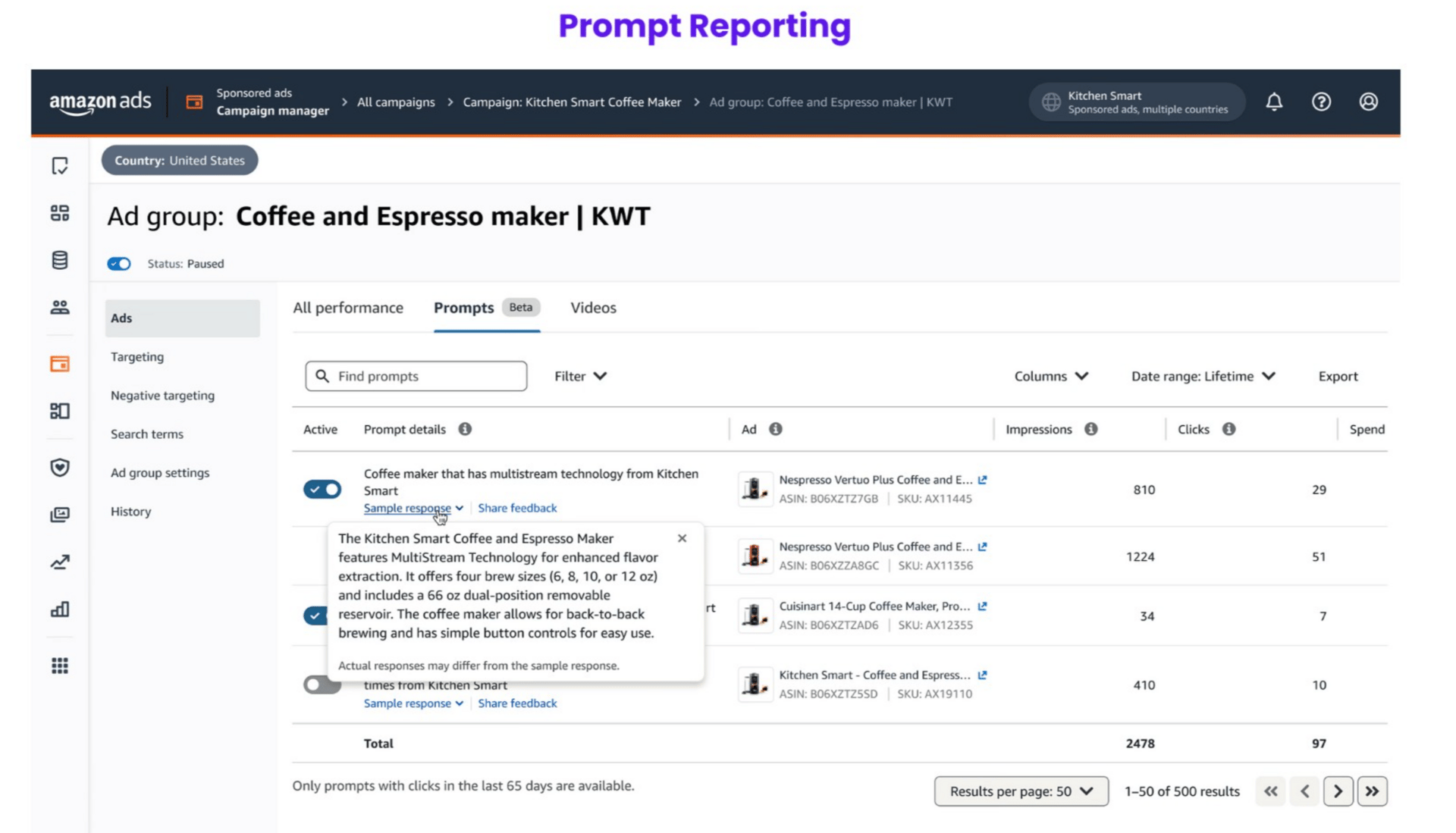
🛍️ Amazon’s next-gen AI assistant for shopping is now even smarter, more capable, and more helpful

🚀 Seller Challenge launches for Account Health Assurance on Amazon
💰 Amazon sending automatic refunds to millions of Prime members
🚀 Conversion Path Reporting is Here!
Amazon is rolling out Conversion Path Reporting, a view of the actual ad touch points a shopper sees in the 30 days before they purchase.
It pulls data from Sponsored Products, Sponsored Brands, Sponsored Display, Sponsored TV, and Amazon DSP, and surfaces the most common and most efficient paths.
Advertisers will be able to see their top five paths directly in Ad Console.

Upper-funnel formats like Streaming TV have always been hard to connect to sales.
This report finally shows how those impressions feed into conversions across channels.
Agencies can use it to show the impact of their full media mix, not just last-click performance. It’s always-on, so advertisers can spot patterns quickly and adjust budgets or tactics in near real time.
So basically the Conversion Path Reporting gives a clearer view of what actually moves shoppers through Amazon’s funnel and makes it easier to balance brand building with performance.
🔥 Google Gemini 3 Just Dropped!
Google’s Gemini 3 is the newest frontier model, and the takeaway is straightforward.
It delivers stronger reasoning, better multimodal understanding, and faster output than most models available today.
It’s built for real work across text, code, images, and video, and it’s rolling out across Google Search, the Gemini app, developer tools, and the new Antigravity environment on day one.
Gemini 3 is built to handle depth.
It breaks down overlapping problems, understands intent with less prompting, and stays consistent across long, multi-step tasks.
The model performs well on the hardest benchmarks GPQA Diamond, ARC-AGI-2, MMMU-Pro, AIME 2025 and shows a clear jump in visual–logical reasoning and scientific problem-solving.
It also runs fast, reaching about 130 tokens per second, which makes it suitable for interactive apps where latency matters.
Gemini 3 leads on key reasoning and real-world use leaderboards
Antigravity platform powers hands-free, end-to-end app building
Smarter context means clearer, more authentic outputs
A higher-gear mode, Gemini 3 Deep Think, pushes the reasoning further.
Deep Think will reach broader users after safety testing.
How it compares to ChatGPT (GPT-5.1)
Gemini 3 is the more capable model in raw reasoning, multimodal tasks, long-horizon agents, and speed.
GPT-5.1 is the more stable and cost-efficient model for environments where predictable behavior and budget discipline matter.
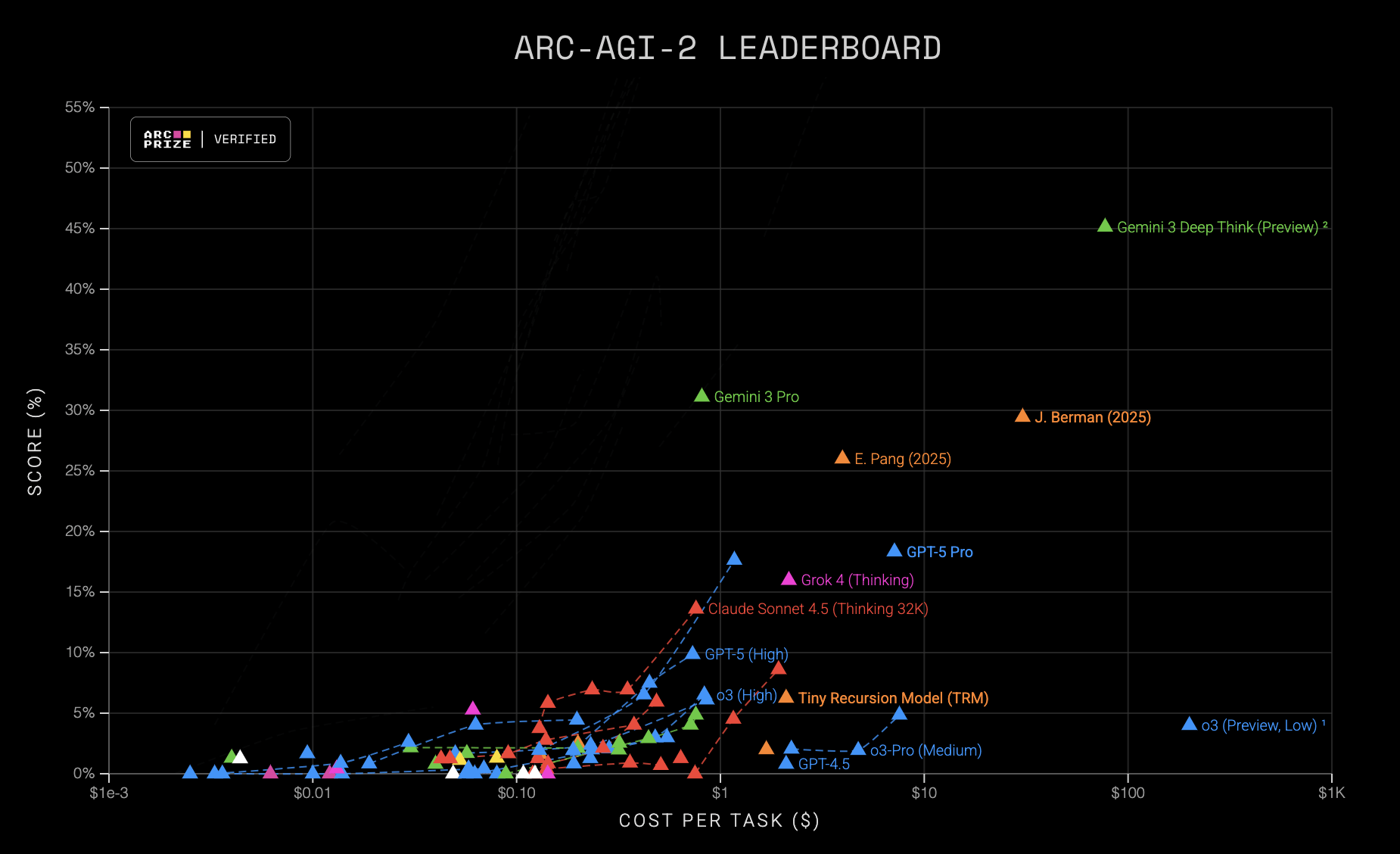
This graph measures cost per task and efficiency
The scatter plot above visualizes the critical relationship between cost-per-task and performance - a key measure of intelligence efficiency.
The reality is that Gemini 3 lifts the ceiling on what a general-purpose model can do. GPT-5.1 holds a strong position on stability and cost. And for builders, the ability to combine them is becoming just as important as choosing one.
And I haven’t even mentioned Nano Banana Pro…
Here are just a few images made with the new AI image generator.

Created by Katelyn Chedraoui using Gemini AI
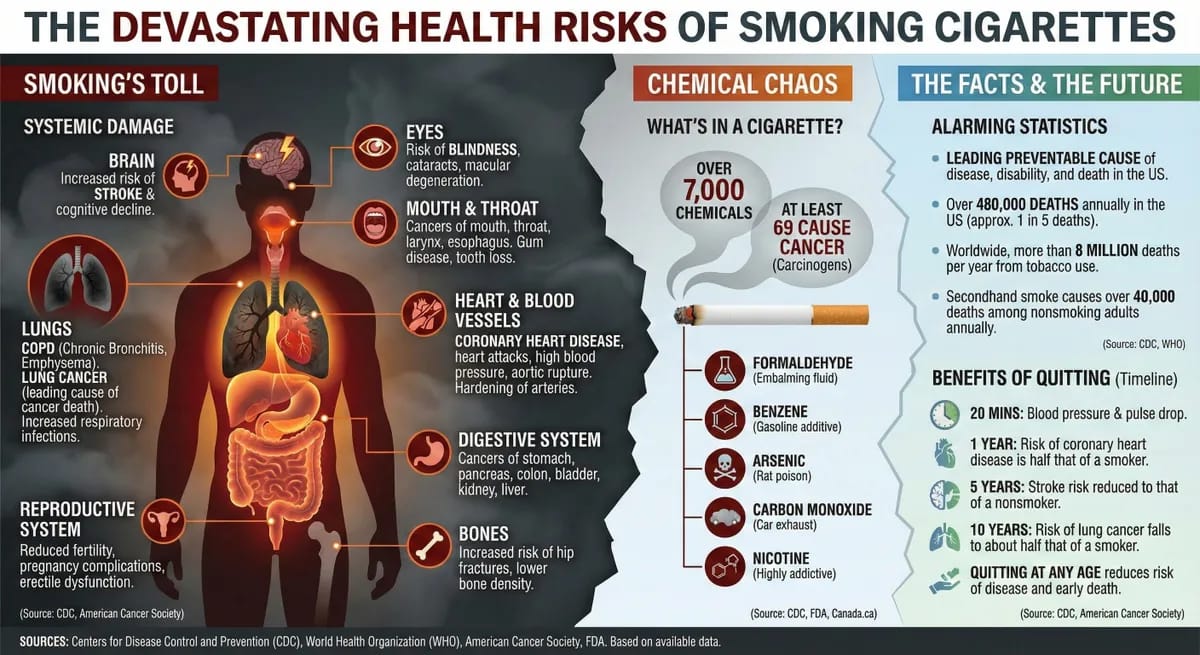
Created by Katelyn Chedraoui using Gemini AI
In my opinion, OpenAI has a lot of ground to cover. I think we just found the #1 competitor.
🌎 Where in the World is The Beard Guy?

Can you find Norm in the picture below? Scroll to the bottom of this newsletter to see the answer!
😱 There Are Now OVER 100,000 Million-Dollar Amazon Sellers!
Million-dollar sellers have jumped from about 60,000 in 2021 to more than 100,000 today.
At the very top, over 230 sellers now exceed $100 million a year on a single marketplace up from around 50 four years ago.
This growth happened while the total number of active sellers fell by roughly 10 percent.

In 2025 there are fewer players, bigger winners.
Key points worth understanding:
Amazon’s active seller base has thinned but revenue concentration has intensified.
In the U.S., only 2% of sellers now generate over half of total marketplace revenue.
Traffic per seller is up 31% since 2021, meaning less competition for attention among the sellers who remain.
The U.S. continues to dominate, with 43% of sellers making $100K+ annually (global average: 19%).
Chinese sellers now make up the majority at the million-dollar tier on Amazon.com.
Rising fees, tariffs, and margin pressure pushed weaker operators out, leaving more room for those capable of adapting.
Look at the U.S. market: of the 235 sellers doing $100 million or more, 146 are on Amazon.com. At that tier, most are U.S.-based (117), but at the million-dollar level the distribution flips – 57% are Chinese, 39% American.
Chinese sellers now represent more than half the seller population at scale.
This is exactly what a power-law marketplace produces: a smaller pool of highly capable sellers absorbing most of the gains.
The top tiers are growing faster than the lower tiers, widening the gap between those who can operate in Amazon’s increasingly technical environment and those who can’t.
🔥 Read the full article here
How We Built a Business Name & Logo Generator as a Startup Founder
Level: EASY
Here’s how we used Google AI Studio to spin up a business name and logo generator in less time than it takes to brew coffee.
How We Did It:
1. Spot a Tedious Task to Automate
We picked a real pain point: generating unique, catchy business names with matching logo concepts. It’s something every founder faces, and it’s easy to get stuck or lose hours on.
2. Describe the App in Plain English
In Google AI Studio’s Canvas interface, we typed:
‘Create an app that takes user input of keywords related to their business and returns 20 unique and creative business name suggestions. The user can select one name and receive a custom logo concept generated based on the chosen name.’
Obviously, the more information you give, the better the output.
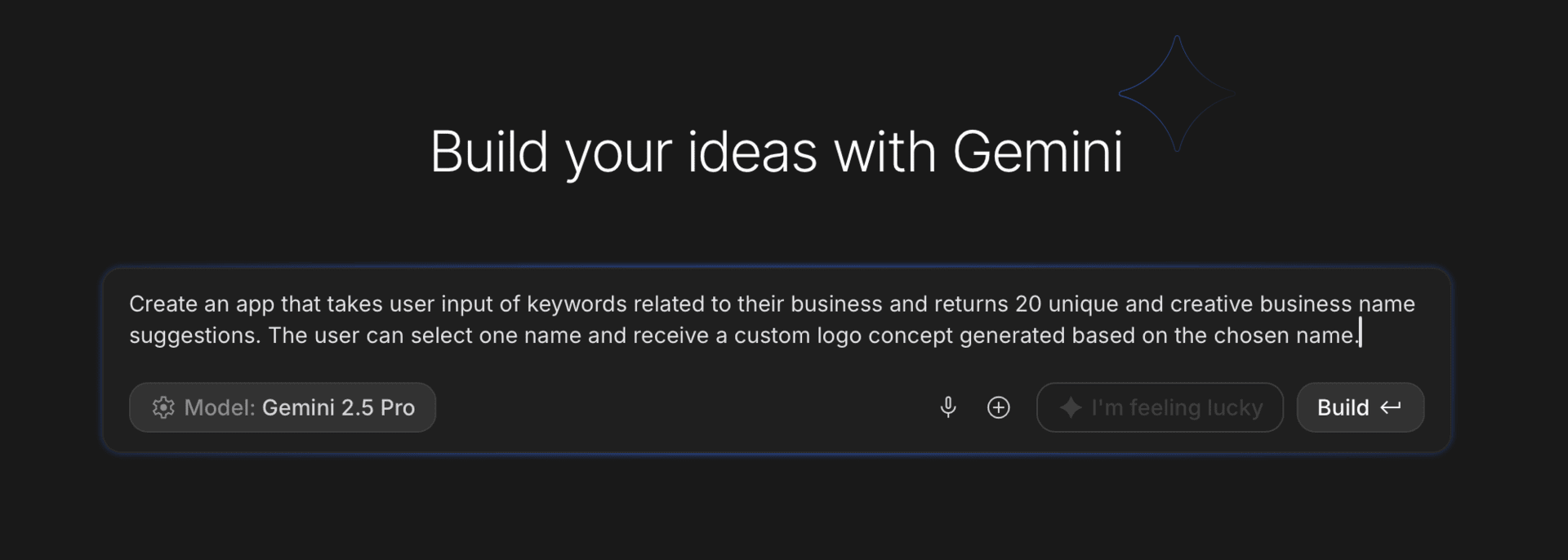
3. Let Google AI Studio Build the App Automatically
Gemini AI took over, building the app logic and layout in seconds. This included:
Keyword input field
“Generate Names” button
List of 20 creative business names
Selection interface for picking a favorite
Logo generator tied to the chosen name
4. Test & Refine with Simple Commands
We entered sample keywords like “eco,” “friendly,” “coffee.” Instantly, the app returned 20 name ideas. We selected one and, with a click, got a custom logo concept.
Want to tweak the look? We told the app,
‘Let users upload a style guide for logos’ and ‘Make the logo colors green and brown.’
Gemini updated the app in real time, so there was no tech expertise needed.

5. Explore Advanced Options in Vibe Coding
For more control, we tried Google’s “Vibe Coding” mode. Here, we could
Add voice assistants, image animation, or live web data
Use templates or “I’m Feeling Lucky” for new app ideas
Share the app with collaborators for real-time feedback

6. This is how a simple tool turns into a full-fledged automation asset for your business.
7. Extend Your Automation Ecosystem
We checked out Google Labs for other tools such as automating emails, generating marketing copy, or analyzing spreadsheets. Each mini app became a reusable “AI assistant” for different business workflows.
If you would like to learn more about AI check out FUTUREPEDIA

🔥 $997 Per Ticket!? The Bride Who SOLD OUT Her Wedding… Literally

Here are my favorite tips from this episode!
1. YouTube Has Shifted From Search to Retention-Based Storytelling
Marley makes it clear the old “how-to SEO” model still works, but it’s no longer the engine. YouTube now rewards creators who hold attention through constant hook resets, open loops, and narrative pacing. It’s closer to writing a TV episode than making a tutorial. Creators stuck in 2016 editing patterns get buried.
2. Hooks Are No Longer Just the First Three Seconds
Most creators obsess over the intro. The pros build multiple peaks, new questions, interruptions, reveals, humor, and tension every 20–40 seconds. If you don’t keep surprising the viewer, YouTube will not push your video, no matter how strong the opening line is.
3. You Must Build Open Loops the Way Film Directors Do
She breaks down the “Deadpool test”: in the first minute of good filmmaking, the viewer accumulates 5–7 questions. That’s why they keep watching.
Great YouTube videos mimic cinema → deliberate unanswered questions, payoffs, callbacks, and breadcrumbs that pull the viewer through the entire timeline.
4. The Editing Process Needs to Start With Intent
The best creators don’t just “record and hope.” They either:
Plan hooks, reveals, loops before pressing record
orFilm freely, then pull the most intriguing mid-video moments upfront in the edit
5. Long-Form + Shorts on One Channel Now Outperforms Split Channels
YouTube has shifted its internal logic. Marley once recommended separating short-form and long-form, but today the platform has unified its consumption behavior. Shorts feed long-form and vice versa, on the same channel. Splitting them dilutes your identity and your algorithmic “viewer graph.”
6. Don’t Promote Your YouTube Uploads Immediately
One of her biggest contrarian insights: don’t blast your new video to your email list or IG the same day you publish. YouTube will mistake that traffic for your primary audience, even if it’s the wrong crowd, and your video can get suppressed. Give the algorithm two weeks to find the right viewers organically before you drive traffic manually.
7. The Real Problem With Creators: Lack of Obsession, Not Lack of Skill
Everyone wants to “go viral,” but almost nobody wants the path:
committing to consistent posting
studying performance
iterating hooks
testing formats
doing polarizing or disruptive ideas
producing creator-level volume
The people who actually break through are the ones willing to become obsessed with the craft, not the outcome.
🔥 Watch the full episode here
Find this episode of Marketing Misfits on YouTube and anywhere you listen to podcasts
🌎 MARK DOWN THESE EVENTS! 🌎
Feb 10-12 - Dubai - Free
Feb 23-26 - Palm Springs - $499.50
Mar 9-11 - Las Vegas - $895 (For Non Members)
April 21 - 23 - Fort Lauderdale - $799
Mar 10-12 - Las Vegas - Starting at $99
→ FULL CALENDAR ←
And that’s it, Beardos.
See you next Monday!
- Norm

Interested in sponsoring the Lunch With Norm Newsletter? Reply back to this email for more details.
Reply